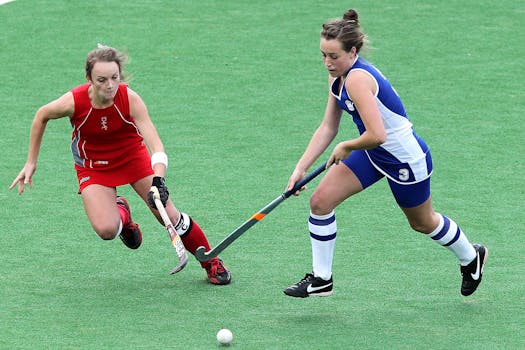
Field hockey is a game of precision, composure, and strategy. Nowhere are these qualities tested more intensely than during a penalty. Whether it’s a penalty stroke or a penalty corner, these moments can decide the outcome of a match. Understanding how to approach these high-pressure situations is crucial for players at every level. This article explores the best strategies for successful penalties in field hockey, drawing on key statistics, proven techniques, and mental tactics to help you turn these pivotal moments into scoring opportunities.
The High Stakes of Field Hockey Penalties
In field hockey, penalties are game-changers. According to the International Hockey Federation (FIH), approximately 35% of all goals in top-tier matches come from penalty corners and penalty strokes. This statistic underscores the impact of these set pieces. Unlike open play, penalties offer a controlled environment where skill, preparation, and psychology come to the forefront, with little room for error.
A penalty corner, awarded for various infractions inside the shooting circle, involves a coordinated attack by a team, while the defenders and goalkeeper try to block a shot or intercept a pass. On the other hand, a penalty stroke is a one-on-one situation between the striker and the goalkeeper, typically awarded for a deliberate foul by a defender that prevents a probable goal. Each type demands a unique approach to maximize success.

Mastering the Penalty Corner: Precision and Deception
The penalty corner, often called the “short corner,” is a cornerstone of field hockey tactics. Teams at the international level dedicate significant training time to perfecting their penalty corner routines, as evidenced by the Netherlands women’s national team, which scored over 40% of their goals from corners during the 2022 FIH Women’s World Cup.
Key Strategies for Penalty Corners:
1. $1 Successful teams develop multiple penalty corner routines, including direct hits, drag flicks, deflections, and slip passes. This keeps defenders guessing and prevents them from anticipating the play. For example, the “castle” setup allows for quick changes in the direction of the pass or shot, adding unpredictability. 2. $1 Each player in the penalty corner unit has a defined role—injector, stopper, striker, and post players. Precision in each action is crucial; a misstep in the injection or stop can disrupt the entire routine. 3. $1 The drag flick is a specialized technique that combines speed and accuracy. Top drag flickers, like Gonzalo Peillat of Argentina, can propel the ball at speeds exceeding 100 km/h. Mastering this technique requires hours of practice to perfect the grip, body posture, and follow-through. 4. $1 Adding feints or dummy passes can unsettle defenders and the goalkeeper, opening up space for a clean shot. Some teams employ a fake shot to draw the defense out of position before executing the actual play. 5. $1 Often, initial shots are blocked or saved. Players must be alert for rebounds and prepared to capitalize quickly, turning a saved shot into a second-chance goal.Penalty Stroke Excellence: Composure Under Pressure
A penalty stroke is the ultimate test of nerve and skill. With only the goalkeeper standing between the striker and a goal, the pressure can be immense. According to FIH data, the average conversion rate for penalty strokes at elite tournaments stands at 73%, highlighting both their opportunity and challenge.
To consistently succeed with penalty strokes, players must:
1. $1 Indecision is the enemy. The best strikers pick their target—whether aiming low to the corner or high to the roof—and stick with it, regardless of the goalkeeper’s movements. 2. $1 Accuracy outweighs power. A controlled push or flick with the right body alignment is more effective than a rushed, hard shot. Maintaining consistent body mechanics helps disguise the intended direction. 3. $1 Goalkeepers will often try to distract or “psyche out” the striker with movement or eye contact. Top penalty takers practice ignoring these tactics, focusing solely on their routine. 4. $1 Elite players incorporate penalty stroke practice into their daily training, developing a pre-shot routine that calms nerves and promotes muscle memory.Goalkeeper Tactics: Turning the Tables
While much attention focuses on the shooter, goalkeepers play a pivotal role in penalty situations. Their ability to anticipate, react, and intimidate can make the difference between a goal and a crucial save.
Key Goalkeeper Strategies:
1. $1 By analyzing a striker’s body language and foot positioning, experienced goalkeepers can anticipate the direction of the shot. 2. $1 In penalty corners, goalkeepers must move laterally at lightning speed. During strokes, split-second dives or stick blocks are essential. 3. $1 Goalkeepers often use subtle movements or delay tactics to unsettle the striker. Studies show that forcing a striker to wait even a few extra seconds can increase anxiety and reduce accuracy. 4. $1 For corners, goalkeepers direct their defenders, assigning roles such as first runner, post defender, and rebounder, ensuring all angles are covered.Statistical Comparison: Penalty Corners vs. Penalty Strokes
How do penalty corners and penalty strokes compare in terms of success rates and impact? The following table summarizes key differences and outcomes based on recent international tournaments:
| Aspect | Penalty Corner | Penalty Stroke |
|---|---|---|
| Average Success Rate | 28% (FIH World Cup 2022) | 73% (FIH World Cup 2022) |
| Number per Match (avg.) | 7-9 per team | 0-2 per team |
| Player Involvement | 5 attackers + defenders | 1 striker vs. goalkeeper |
| Main Skills Required | Team coordination, set plays | Composure, accuracy |
| Chance for Rebound | Yes | No |
This data highlights that while penalty strokes offer a higher probability of scoring, penalty corners occur more frequently and can be planned for with set routines.
Mental Preparation: The Edge in High-Pressure Situations
Penalties are as much a mental contest as a physical one. Studies from sports psychologists reveal that athletes who incorporate mental training—visualization, breathing exercises, and positive self-talk—perform better under pressure. In a 2021 study of elite field hockey players, those using visualization techniques improved their penalty conversion rate by 14%.
Mental strategies for penalty success include:
1. $1 Players mentally rehearse the penalty routine, imagining a successful outcome to build confidence and reduce anxiety. 2. $1 A consistent routine before taking a penalty calms nerves and improves focus, whether it’s a specific breathing pattern or a set number of stick taps. 3. $1 Recognizing that nerves are normal helps players channel adrenaline into sharper focus rather than panic. 4. $1 Coaches and teammates who offer encouragement and constructive feedback can boost a player’s confidence, especially after a missed attempt.Training for Consistent Penalty Success
Consistent success with penalties doesn’t happen by chance—it’s the result of deliberate, focused training. Top clubs and national teams dedicate specific sessions to penalty practice, often simulating match-pressure scenarios.
Effective penalty training should include:
1. $1 Repetitive practice of drag flicks, injections, and stops for corners, and stroke technique for penalty shots. 2. $1 Replicating match conditions, including time pressure and crowd noise, helps players adapt to real-game stress. 3. $1 Reviewing footage of both successful and unsuccessful penalties provides valuable insights. For example, analyzing the Indian men’s team’s penalty corner routines before the 2021 Tokyo Olympics revealed patterns that led to tactical adjustments and a bronze medal finish. 4. $1 Incorporating fitness, agility, and reaction drills ensures players and goalkeepers are physically prepared for the demands of penalty situations.Final Thoughts: Turning Penalty Pressure into Scoring Power
Mastering penalties in field hockey is a blend of art and science. It demands technical skill, strategic planning, mental toughness, and relentless practice. Whether you’re a striker aiming to outwit the goalkeeper, a defender orchestrating the corner defense, or a goalkeeper reading the shooter’s intentions, every detail matters. By embracing these evidence-based strategies, players and teams can turn the pressure of penalties into a powerful weapon—one that not only scores goals but also wins matches.